 UniWest
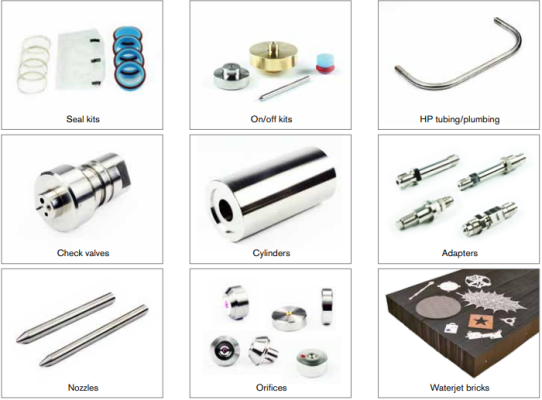
When waterjet cut quality suddenly changes, the problem is not always the cutting program or the material being processed. Worn waterjet parts can disrupt pressure, jet alignment, abrasive flow, and overall cutting consistency. Inspecting common wear components before making major machine adjustments can help narrow down the cause faster. UniWest supplies waterjet replacement parts through AccuStream, including mixing tubes, focusing tubes, orifices, on/off valves, seals, high-pressure components, and pump rebuild kits for several major OEM systems.
What Does Poor Waterjet Cut Quality Look Like?
A decline in waterjet cut quality can appear in several ways. Operators may notice heavier striations, increased taper, a wider or inconsistent kerf, rougher edges, poor corner definition, or cuts that no longer pass completely through the material.
Cut speed can influence edge finish, so a rougher surface does not automatically mean a component has failed. However, when the same material, program, and operating settings suddenly produce different results, worn waterjet parts should be included in the troubleshooting process.
Before changing cutting parameters, compare current parts with previous cuts and look for noticeable changes in edge finish, kerf width, pressure, or abrasive delivery.
1. Inspect the Mixing and Focusing Tubes
The mixing or focusing tube directs the abrasive waterjet stream toward the workpiece. Abrasive continually passes through this area at high speed, making these components normal wear items.
Signs that these parts may need attention include:
- Wider or irregular kerf
- Increased edge taper
- Rougher cut surfaces
- Reduced cutting efficiency
- Inconsistent cutting results
As internal wear develops, the jet may become less focused. When waterjet cut quality begins changing, inspecting the mixing and focusing tubes can help determine whether normal wear is contributing to the problem.
UniWest stocks mixing tubes and focusing tubes as part of its AccuStream waterjet replacement parts offering.
2. Check the Orifice
The orifice forms the high-pressure water stream before abrasive is introduced into the cutting process. Its condition can affect the quality and alignment of the stream entering the mixing chamber.
If an orifice becomes damaged or worn, replacing downstream waterjet parts alone may not completely correct the problem. That is why the orifice, mixing tube, and focusing components should be inspected together when diagnosing cutting-head performance.
UniWest supplies replacement orifices through AccuStream and also stocks genuine OEM parts for OMAX waterjet systems.

3. Look for Seal and Pressure Problems
Consistent system pressure is another important factor in maintaining repeatable waterjet cut quality. Worn seals, high-pressure tubing, fittings, or pump components can contribute to leakage or pressure instability.
Check for several common warning signs:
- Visible leaks around high-pressure connections
- Unexpected pressure fluctuations
- Changes in normal pump performance
- Reduced cutting capability without a programming change
A pressure-related issue may show up at the cutting head even when the worn component is located elsewhere in the system.
UniWest carries seals, high-pressure tubing and fittings, and pump rebuild kits, providing waterjet replacement parts for both routine service and larger maintenance needs.
4. Do Not Overlook the On/Off Valve
The on/off valve controls water flow at the cutting head. If it becomes worn or begins operating inconsistently, starting and stopping the jet may become less predictable.
That can affect pierces, lead-ins, corners, and the beginning or end of a cut. When troubleshooting waterjet cut quality, inspect the valve for leakage, delayed operation, or other abnormal behavior before assuming the issue is entirely related to software, speed, or abrasive settings.
The valve should be evaluated as part of the cutting-head system rather than as an isolated component.
Check Wear Components Before Changing the Process
Waterjet consumables naturally wear during operation, but catching deterioration early can help reduce rejected parts, unnecessary adjustments, and unexpected downtime.
A practical troubleshooting sequence is to:
- Confirm the material and programmed cutting settings
- Inspect the orifice
- Check the mixing and focusing tubes
- Look for seal or high-pressure leaks
- Verify on/off valve operation
- Review pump condition if pressure remains inconsistent
UniWest partners with AccuStream to supply waterjet parts and consumables for Jet Edge, KMT, Flow, WSI, and BFT systems while also stocking genuine OMAX OEM components. Its selection of waterjet replacement parts supports routine consumable replacement as well as high-pressure and pump maintenance.
When waterjet cut quality starts slipping, inspecting common wear components first can help identify the source of the problem and restore more consistent cutting performance. Shop UniWest for dependable waterjet components and support for your equipment.