 UniWest
 Foundry sands play an important role in metal casting because they help form the molds and cores that shape finished parts. But not every sand performs the same way. Grain size, particle distribution, shape, and thermal characteristics can all influence how a mold performs during pouring and how the finished casting turns out. Understanding these differences can help foundries choose a material that fits their process instead of relying on a one-size-fits-all approach.
What Makes Foundry Sand Different?
Sand used in casting applications is selected for controlled physical characteristics. Depending on the molding process, it may be combined with clay or chemical binders so the mold or core can hold its shape while molten metal is poured.
Consistency is especially important with foundry sands. A predictable particle-size distribution can help operators better control permeability, mold strength, binder demand, and surface quality from one production run to the next.
Why Grain Size Matters
Grain size refers to the relative size of the individual particles in the sand. The size and distribution of those particles affect how tightly they pack together and how much open space remains between them.
Finer grains generally create a smoother mold surface, which can help support a finer casting finish. Coarser grains create larger spaces between particles, which can improve permeability and allow gases to move through the mold more easily.
Neither option is automatically better. The best foundry sands depend on factors such as the alloy being poured, mold design, binder system, casting geometry, and desired surface finish.
Grain consistency also matters. A sand with a controlled distribution can help make mold behavior more repeatable than a material containing large variations in particle size.
Thermal Characteristics Affect the Mold Too
Molten metal exposes a mold to intense heat, so the thermal properties of the sand also matter. Thermal expansion describes how much a material expands as it heats, while thermal conductivity affects how heat moves through the mold.
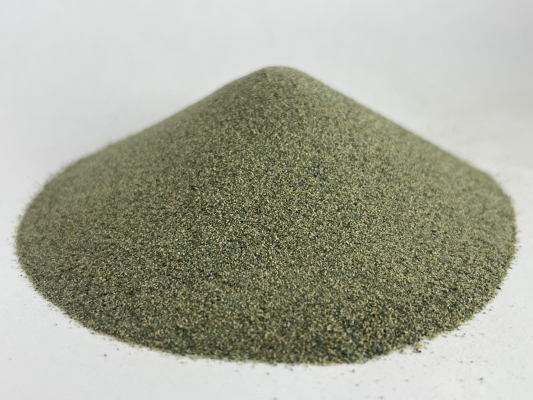
For example, our UniWest Green Diamond material is a synthetic olivine product made in the United States. It has low thermal expansion and low thermal conductivity, no loss on ignition, and high insulating value. Its particle distribution is designed to consistently meet AFS and GFN standards.
Green Diamond foundry sands can be used with aluminum, brass, bronze, gray iron, ductile iron, and manganese steel. We also list them for green-sand, no-bake, and lost-foam applications.
Foundry Sand Options Available From UniWest
We offer several materials for different casting requirements.
INCAST: Our INCAST products are made from Wedron Silica, which the company describes as an extremely high-purity, round-grain silica sand. Available foundry sizes include INCAST-55, INCAST-60, INCAST-70, and INCAST-80, giving customers multiple grain-size options.
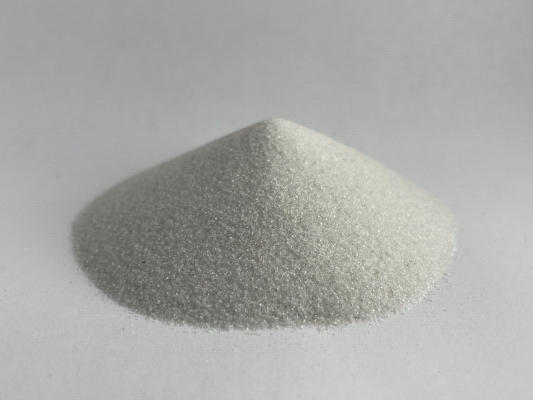
Green Diamond: We offer 115 Green Diamond and 50/100 Green Diamond. These foundry sands are available in 50-pound paper bags, 3,000-pound super sacks, and pneumatic truckloads.
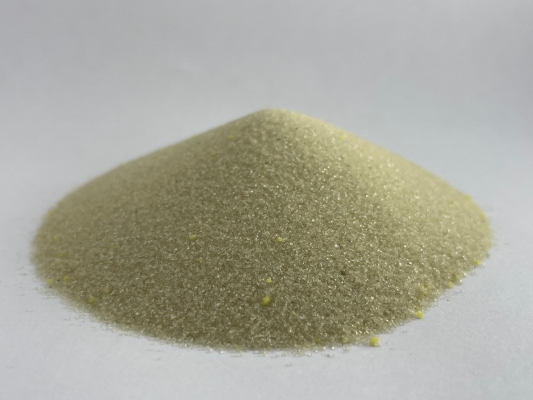
Resin Coated: We also carry 615 Gold Resin Coated and 720N Resin Coated products. These materials are based on high-purity, round-grain Wedron Silica and are intended for applications that use resin-coated molding or core sand.
What Should Be Considered When Selecting Sand?
Choosing the right material involves looking at more than particle size alone. Important factors can include:
- Metal or alloy being cast
- Mold or core process
- Desired surface finish
- Grain-size distribution
- Permeability requirements
- Binder system
- Thermal properties
- Production consistency
The goal is to match the physical and thermal characteristics of the foundry sands to the requirements of the molding process and the casting being produced.
Matching Foundry Sands to the Casting Process
Grain size can have a noticeable effect on mold behavior, but it is only one part of the selection process. Particle distribution, thermal performance, binder choice, permeability, and casting requirements all work together.
At UniWest, we supply INCAST, Green Diamond, and resin-coated foundry sands in multiple grades and packaging options. Understanding how these materials differ can help foundries choose a product that better fits their process and supports consistent casting results.